

Finding the Right Engagement Ring

If handled badly, choosing a ring can become an ordeal; time consuming, expensive and stressful. But it’s something that most men have to go through at some point. So how do you make sure that you don’t get it wrong?

It’s unlikely that you will have a lot of experience to fall back on. For many men, their engagement is their first foray into the world of jewellery shopping, and almost none will have made such a major investment. So how do you find a deal that will leave both you and your fiancĂ©e smiling?

An obvious starting point is to consider how much you want to spend. Traditionally, men have been expected to part with between one and two months salary. But this figure is entirely arbitrary. For years, De Beers had a near stranglehold on the diamond business, and their marketing people relentlessly encouraged men to spend as much as possible on engagement rings.

These days, consumers are increasingly clued up, and are generally confident enough to make up their own minds about how much they want to spend. The short answer is that you should invest as much as you feel you can realistically afford – it’s certainly not worth getting yourself into financial difficulties because you feel under pressure to spend a certain amount.

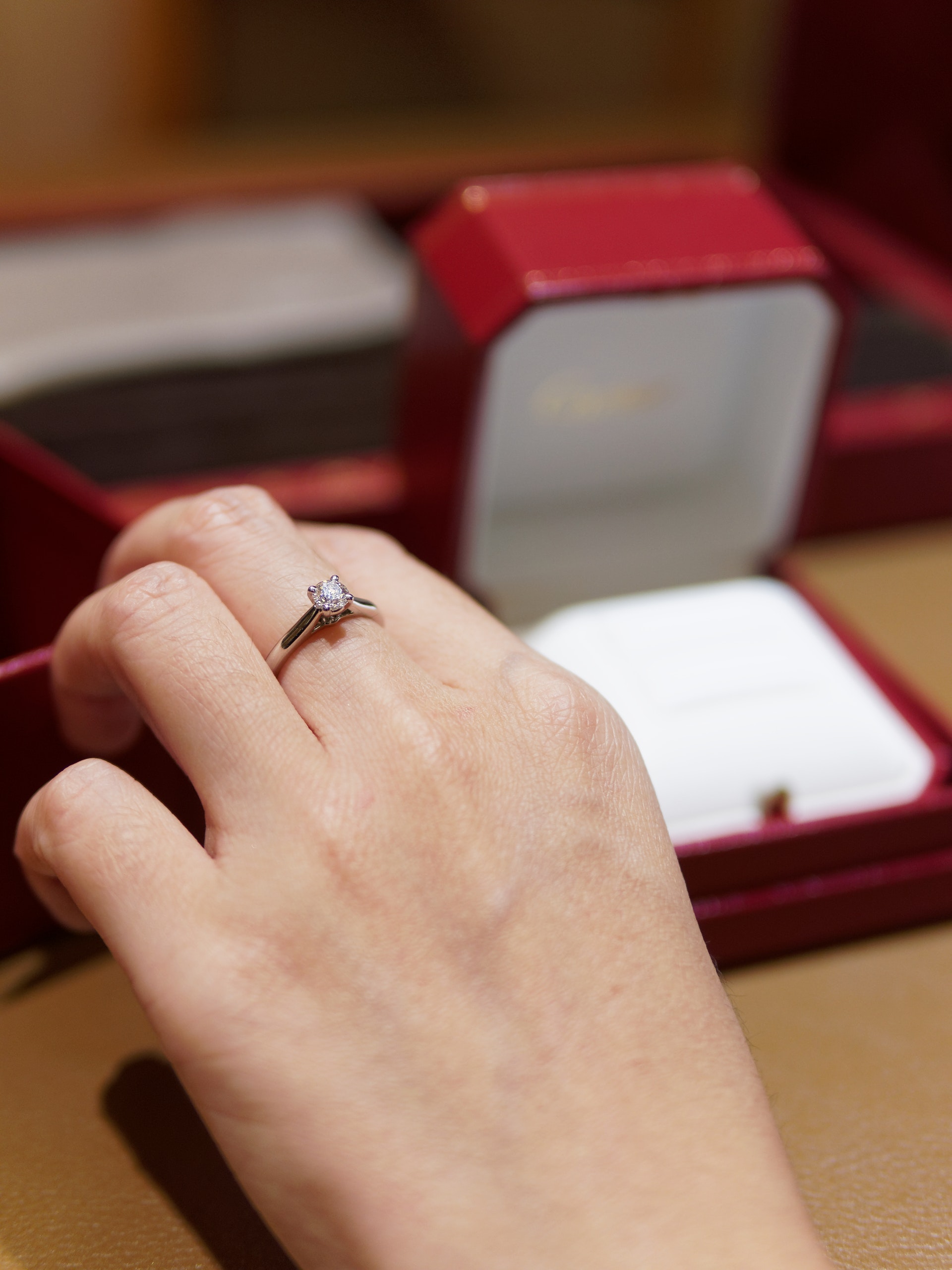
Once you’ve settled on a budget, the next stage is to make sure you get the best ring for your money. This is where things can begin to get tricky. What style should you go for? Most modern engagement rings are made with a solitaire diamond. But would she prefer something more old-fashioned, with several smaller diamonds, or even a cluster? And what metal should you choose?

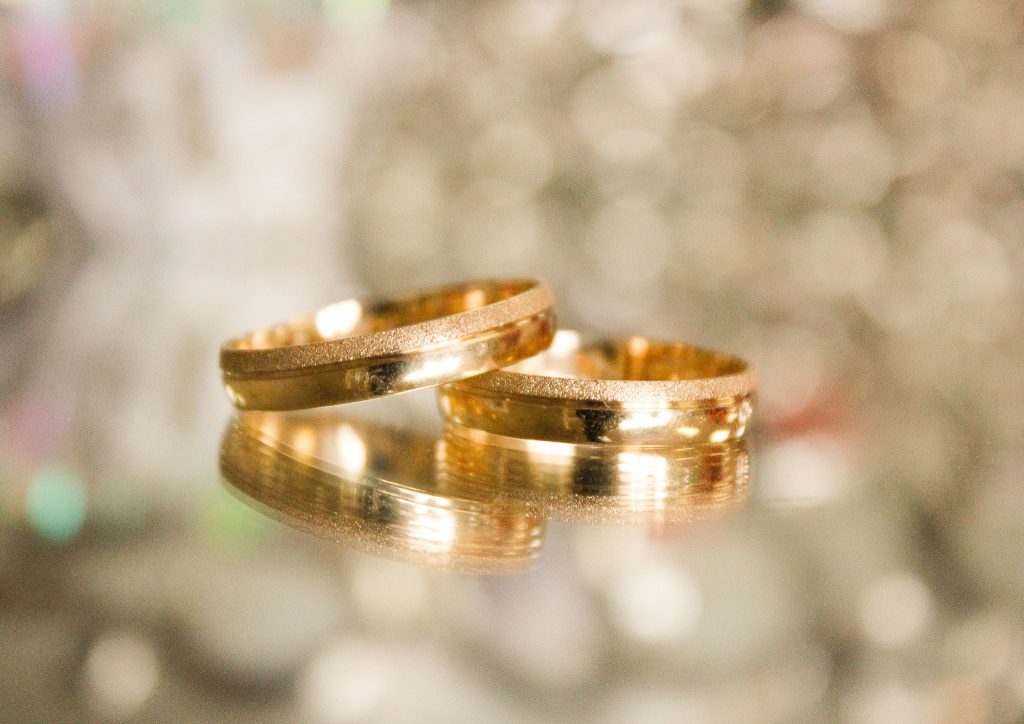
Most engagement rings are made from white metals (platinum or eighteen carat white gold), but perhaps she might want yellow gold or even rose gold. Any information you have about her taste in jewellery is priceless. Do you have access to anything else she has bought, or does she have a friend you can trust to advise you?

If you really don’t know where to start, there are a still a couple of options open to you. Firstly, some jewellers will be prepared to offer you an exchange. If she doesn’t like the ring you choose for her, they’ll swap it for another one of similar value. Make sure you discuss this with the jeweller first though, as not everyone has the same returns policy. Alternatively, you might choose to buy a loose diamond, which you can present to her at the moment you get engaged. Then the two of you can go shopping together, and she can pick a ring to set it in.

Whichever solution you opt for, the biggest single decision you will have to make is over your choice of diamond. This is where the bulk of your budget will be spent, and it’s easy to waste a lot of money if you’re not careful.

The first thing to make sure of is that you are dealing with a reputable retailer. They should be willing for you to examine their rings under a jewellers loupe, and should be more than happy to answer any technical questions that you might have. You might want to consider only buying a diamond that comes with independent certification from a recognized laboratory. If a particular stone hasn’t been certified independently, your jeweller should have no objection to you getting it certified at your own expense before committing to purchase (the cost varies depending on the size of the stone, but is not prohibitive).

So assuming that you have found a jeweler you are comfortable with, how do you choose the best diamond to suit your budget? At this point you will have to wade through a bit of technical jargon to make sure you get the best deal. Diamonds are graded according to the 4Cs carat weight, colour, clarity, and cut and it is these criteria that determine the stones value.

Carat Weight:

All other things being equal, the bigger the diamond, the more valuable it is. Traditionally, men often bought one carat stones for engagement rings (a carat is one fifth of a gram), but these days most people buy stones of less than a carat. Prices go up exponentially with size, and there is a particularly sharp spike at the one carat mark. A good quality stone of less than a carat may well represent better value for money.

Colour:

Very few diamonds are perfectly white; most have a hint of colour in them. Colour is graded from D (the best, perfect white) down to Z (severely discoloured). You could do worse than focus on stones in the range E-H. If you go for a D, you are likely to be paying a premium for a barely discernible improvement. Any lower than H and you will probably notice a hint of yellow in the stone.

Clarity:

Most diamonds have small imperfections or impurities trapped inside them, known as inclusions. The bigger, more central, and more numerous these are, the lower the diamonds clarity is said to be. Clarity grades are IF, VVS1, VVS2, VS1, VS2, SI1, SI2, I1, I2, I3, in descending order. Stones graded I1 and below contain inclusions that are visible with the naked eye, should be avoided. At the top end of the scale, differences are very subtle, and might not be worth the extra cost. Ideally, you would aim for at least VS2 clarity, but if your budget is stretched you could consider dropping to SI clarity without it being a big problem.

Cut:

Jewellers might be referring to more than one thing when they talk about a diamonds cut. It could be a reference to its proportions and symmetry – the better these are, the more effectively the stone will reflect and refract light. A stone with a poor cut will not sparkle nearly as well as one with a good cut. This is one area where it is not worth compromising, you shouldn’t accept anything less than Good grades in this area, ideally Very Good. The term cut can also be a reference to the stones shape, whether it is Round Brilliant, Princess, or some other fancy shape. This is very much a matter of personal taste.

One thing to bear in mind though is that the round brilliant cut has been evolved over decades to maximize a diamonds sparkle and, everything else being equal, will sparkle more than other cuts. That’s not to say that you shouldn’t choose a different shape if you particularly like it but if you don’t have a strong preference, then you wont go far wrong with a Round Brilliant Cut.

Be the first to comment - What do you think?
Posted by shawnman - August 11, 2010 at 7:57 pm

Categories: Engagement Rings   Tags:

Diamond Quality and the 4 C’s

Diamond Quality

Your second step in finding the right diamond is to decide on the basic 4 Cs:
Cut,
Color,
Clarity, and
Carat Weight.
Decide on Cut

The Cut actually refers to two separate aspects of a diamond’s appearance:
1) shape, and 2) quality of workmanship.

Popular diamond shapes include Round, Marquise, Princess, Radiant, Pear, Oval, Emerald, and Heart.

Choose two shapes if possible and write them on your checklist.

There is only one way to find out what she wants in this regard — ask her. But if you’re sneaky, you can find out by having her best friend ask her discreetly and tell you. Either way, you should definitely find out about this before you buy…because some women are very attached to certain diamond shapes.

If you like to live dangerously (though we do not recommend it in this case), you could pick one of the most popular shapes to increase your odds of picking her favorite. The most popular shapes this year in our experience, in order, are: Round brilliant, Princess, Emerald

It is extremely important to learn about the make of a diamond for three reasons:

1) the make varies greatly from one diamond to another
2) the make determines over 90% of the beauty of a diamond
3) a concise grade for the make is not included on most diamond certificates, including the GIA diamond grading report

If you want perfection regardless of cost — go for the Ideal Cut.

If you want quality and beauty — go for very good to excellent make.

If you want a larger stone for your money — go for good make.

If you want the lowest grades — we don’t recommend fair to poor makes for engagement rings due to a noticeable lack of brilliance and fire (even when color and clarity are very high).

Color

The color of diamonds varies from colorless (most rare and precious) to many shades of yellow (less rare). Slight tints of yellow make a diamond less rare, but some people prefer the personality it gives a stone of good make and clarity.

If you want perfection regardless of cost — go for D color

If you want excellent quality and beauty — go for E or F colors (still colorless to any eye)

If you want a larger stone for your money without sacrificing appearance — go for G, H, or I colors (near colorless, especially in a gold setting)

If you like very faint yellow tints — go for colors like J, K, L, or M (you can see the slight tint when next to a more colorless diamond or when set in a white metal like platinum)

Clarity

Every diamond has some internal or external “flaws,” but you should decide based on how much they are visible and how much that means to you. Usually, flawless to the naked eye (SI-1 or better) is quite sufficient for anyone concerned about beauty but not wanting to pay extra for rarity you can’t see.

If you want perfection regardless of cost — go for Flawless or Internally Flawless (very rare and expensive but possibly the only grade you will always be proud to own)

If you want it to look flawless under a loupe but not pay for flawless — go for VVS1 or VVS2 clarity grades (still flawless to an untrained eye with a 10x loupe)

If you want to see very little with a loupe and nothing to the naked eye — go for VS1, VS2 clarity grades (certainly flawless to the naked eye, even to a diamond grader)

If you just want it flawless to the naked eye — go for SI1 or SI2 clarity grades (some SI3 stones will also be flawless to the naked eye); remember that many women really only want this degree of flawlessness

If you don’t mind some small inclusions that might be visible to the naked eye and want a larger stone that still sparkles — go for I1 clarity

If you were interested in the lowest clarity grades (I2 or I3) — we don’t recommend them for engagement rings because they lack brilliance and crack or chip more easily due to large structural flaws.

Carat Weight

The next decision (the size you can afford in your preferred quality) is mathematically complicated and requires extensive knowledge about diamond pricing.

Carat weight is actually the last of the four Cs to consider, surprising as this may seem. Although size will be the single most important factor in the price of a stone, it does not affect the beauty. First, decide on the quality you want (the first 3 Cs above), then decide on the largest size you can afford to meet those guidelines. We make it easy.

Following are some points to help you decide the budget and size for your diamond:

Most people budget between 1 to 3 months’ salary for a diamond engagement ring, depending on what will make her happy while keeping your bank account open. Only you can determine the right amount to spend. Set your budget, then continue to the next step.

The most popular sizes are 1/2 carat, 1-carat, and 2-carat diamonds.

Invest the time to learn about diamond prices. You’ll notice many rules that are unique to the gemstone market. For instance, a 1-carat diamond is much more costly than two 1/2 carat diamonds of the same quality.

You should find out what she prefers for the size. Ask her best friend to find out if possible.

All in all, the best rule is to:

1 — Buy the quality that will make her happy, considering that this will be one of the most important purchases you ever make.

2 — Budget only enough that you both feel proud of your commitment to each other, and not so much that the cost becomes a major stress.

Be the first to comment - What do you think?
Posted by shawnman -  at 7:47 pm

Categories: Diamonds   Tags: